Port Coquitlam's terrain tells a story shaped by the Fraser and Pitt Rivers. The alluvial deposits and silty clays that define much of the city's subsurface demand foundation solutions that distribute loads evenly over a broad area. When a site investigation reveals compressible layers extending 8 metres or more below grade, isolated footings rarely provide the necessary performance. A raft or mat foundation becomes the logical path for managing total and differential settlement. The city's annual precipitation, averaging over 1,800 mm, keeps groundwater levels high across low-lying neighbourhoods from Mary Hill to Citadel Heights. This persistent moisture softens the upper crust and reduces bearing capacity just when the structure needs it most. Our geotechnical team integrates field data from test pits and in-situ permeability testing to model how water and soil interact beneath the proposed footprint, ensuring the mat design remains stable through wet winter cycles.
In Port Coquitlam's alluvial environment, a properly designed mat foundation doesn't just support the structure — it actively bridges the variability hidden beneath the surface.
Service characteristics in Port Coquitlam
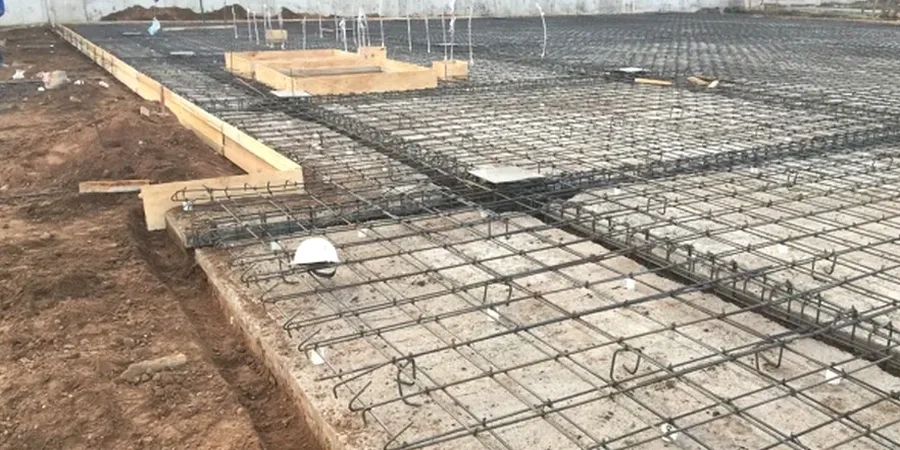
Local geotechnical conditions in Port Coquitlam
The Coquitlam River's historical meandering left behind buried channels filled with loose granular material and organic silt that standard boreholes can miss between sampling intervals. One of the most significant risks in Port Coquitlam is differential settlement caused by these hidden lenses — a stiff mat can bridge a soft pocket, but only if the designer knows it exists. Seasonal groundwater fluctuation adds another layer of complexity. From November through March, the water table can rise to within half a metre of grade in areas adjacent to the Hyde Creek watershed. This creates uplift pressures that must be counterbalanced by the dead weight of the mat and the structure above. Ignoring buoyancy leads to cracking, tilting, and eventual serviceability failure. We also address frost protection in shallow mats near unheated garages, where edge thickening and vertical insulation prevent heave during the occasional cold snap when temperatures dip below -5°C for several days.
Our services
Mat foundation design in Port Coquitlam requires coordination between geotechnical analysis and structural detailing. The services below address the soil side of the equation, providing the parameters that drive reinforcement schedules and thickness calculations.
Settlement and Bearing Capacity Analysis
We calculate immediate and consolidation settlement under the full structural load using compressibility parameters from laboratory oedometer tests on undisturbed Shelby tube samples. Outputs include subgrade reaction modulus contours across the mat footprint and recommendations for any required soil replacement beneath the bearing elevation.
Buoyancy and Groundwater Management
For mats extending below the seasonal high groundwater level, we perform hydrostatic uplift checks and design sub-slab drainage systems where passive weight alone is insufficient. Monitoring piezometers installed during the investigation phase provide long-term water level data that calibrates the design assumptions.
Quick answers
What is the typical cost range for a raft foundation geotechnical design in Port Coquitlam?
Geotechnical design fees for a mat or raft foundation in Port Coquitlam generally range from CA$1,620 to CA$6,540, depending on the building footprint, number of soil strata requiring characterization, and whether plate load testing or additional CPT soundings are needed to refine the subgrade modulus. Projects with complex groundwater conditions or seismic liquefaction checks fall toward the upper end of the range.
How does the NBCC seismic hazard for Port Coquitlam affect mat foundation design?
Port Coquitlam falls within a region of moderate to high seismic hazard under NBCC 2020. The design must account for spectral accelerations at the site's fundamental period and check that the mat's rigidity prevents excessive differential movement during shaking. Where loose saturated sands are present below the mat, a liquefaction assessment determines whether ground improvement or a thicker structural raft is justified.
What soil conditions in Port Coquitlam make a raft foundation the right choice?
Raft foundations become the preferred option when the near-surface soils exhibit low bearing capacity — typically below 75 kPa — or when the total settlement under isolated footings would exceed 25 mm. In Port Coquitlam, this frequently occurs in areas with deep alluvial clay deposits, organic silts from former river channels, or variable fill thickness across the site. The mat spreads the load and reduces the pressure on any single weak zone.
How do you handle high groundwater when designing a mat foundation near the Pitt River?
High groundwater requires a buoyancy check comparing the submerged weight of the structure plus mat against the hydrostatic uplift force. If the factor of safety against flotation is below 1.2, we typically recommend either increasing the mat thickness for additional dead load, extending the footprint, or installing a permanent sub-slab drainage system with a sump pump to lower the water pressure. Long-term monitoring data from the site investigation phase informs this decision.