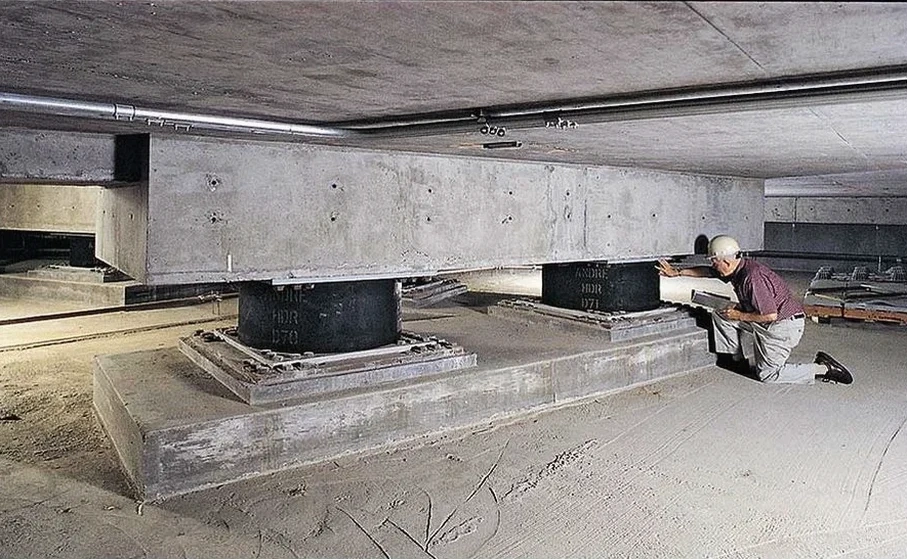
Port Coquitlam sits on the deep sediments of the Fraser River floodplain. The soil here amplifies earthquake shaking. A standard fixed-base building moves with the ground. That puts every joint and weld at risk. Base isolation changes the equation. It decouples the structure from the soil motion. The isolators absorb displacement. The building above stays calm. Our team applies the Port Coquitlam-specific spectral accelerations from NBCC 2020. We do not use generic Vancouver numbers. The ground here is different. The hazard is real. A well-designed isolation system pays for itself in one moderate event. Combine it with a seismic microzonation study to map site period across the property. If the soils are loose, a CPT test confirms liquefaction potential before we finalize the isolator specs.
An isolated building in PoCo can see 60-80% less floor acceleration than a fixed-base structure during a Fraser Valley design earthquake.
Service characteristics in Port Coquitlam
Local geotechnical conditions in Port Coquitlam
Compare two sites in Port Coquitlam. Downtown near Shaughnessy Street sits on loose alluvial silts. The shear wave velocity is low. Site amplification is high. A fixed-base three-storey building will shake violently. In contrast, the Mary Hill area has stiffer glaciomarine deposits. Shaking is less, but still significant. Base isolation works well on both. But the soft downtown site needs a longer-period isolator. The displacement demand is bigger. The moat walls get wider. Ignoring site-specific analysis leads to pounding. Pounding destroys the isolation effect. We model site response with DEEPSOIL. We input the uniform hazard spectrum from NBCC. We check residual displacement after the earthquake. The isolators must re-center. If they drift permanently, the building tilts. That cannot happen. Our designs include a liquefaction assessment because a flow failure under the isolation plane is catastrophic.
Our services
Our Port Coquitlam base isolation services cover the full design and testing cycle. We work with structural engineers of record. We provide isolator specifications. We witness prototype testing. We review shop drawings. The goal is a solid isolation plane that works.
Concept Design and Feasibility
We run preliminary response spectrum analysis. We compare fixed-base vs isolated base shear. We estimate isolator size and cost. We confirm the concept works for your PoCo site class.
Detailed Design and Peer Review
We produce the full isolation package. Isolator schedule. Moat details. Flexible utility specs. We can peer-review another firm's design for NBCC compliance.
Prototype Testing Oversight
We write the test protocol per ASCE 7-22. We witness cyclic shear tests at the manufacturer's lab. We verify effective stiffness and damping match the design values.
Quick answers
Does base isolation make sense for a small two-storey commercial building in Port Coquitlam?
It depends on the use. For high-importance buildings like clinics or data centers, yes. The additional cost buys immediate occupancy after a quake. For standard retail, a ductile fixed-base design with higher R-factor may be cheaper. We assess both paths.
What is the typical cost range for base isolation design in PoCo?
The engineering design and testing oversight for a small to mid-size building typically ranges from CA$5,820 to CA$10,890. This covers concept design, detailed analysis, and prototype test witnessing. Isolator hardware costs are separate and depend on quantity.
How do you handle the soft soils along the Coquitlam River in the isolation design?
We run site response analysis using DEEPSOIL. We input the NBCC uniform hazard spectrum at the bedrock level. The analysis propagates the motion upward. We capture the amplification at the isolation period. This ensures the displacement demand is not underestimated.
Do we need to import special isolators from overseas?
No. We specify isolators from North American manufacturers with proven track records. We require full-scale prototype testing per ASTM D4015. The lead time is manageable. We coordinate the submittal and review process.
What happens if the isolators need replacement after a major earthquake?
The design includes access provisions. The isolators sit between the foundation and the podium slab. Jacking points allow lifting the building a few millimeters. The damaged isolators unbolt and slide out. The moat provides working space. We design the system for this replacement scenario from day one.