Port Coquitlam sits on a complex geological interface where the Coquitlam River deposits coarse alluvium over glacially consolidated sediments. The near-surface stratigraphy often shifts from silty sand to gravelly till within a few meters horizontally. A borehole log can miss this. The exploratory test pit opens a window into the ground, letting the geotechnical engineer map soil layers, measure in-situ density, and collect undisturbed block samples directly from the excavation wall. For projects near the Pitt River flats or along Broadway Street’s redeveloping corridor, the method reveals fill pockets and organics that standard drilling might smear past. When the pit is open, we also run in-situ permeability tests at the target depth to estimate infiltration rates for stormwater management design under Metro Vancouver guidelines.
A 3-meter trench in the Coquitlam River floodplain can reveal more about site stratigraphy than three boreholes spaced 10 meters apart.
Service characteristics in Port Coquitlam
The regulatory framework here is specific: WorkSafeBC Part 20 trenching regulations dictate sloping or shielding requirements, and the City of Port Coquitlam requires a geotechnical site characterization report referencing the current edition of the BC Building Code before issuing foundation permits for Part 9 structures on suspect ground.
Local geotechnical conditions in Port Coquitlam
The shoulder seasons in Port Coquitlam bring persistent rainfall that saturates the shallow sandy silts overlying the till. An open trench in November can collapse within hours if the soil loses suction. This is not a hypothetical risk: the Coquitlam River alluvium contains lenses of loose saturated sand that slough when exposed. Our protocol includes a mandatory pre-excavation utility locate through BC 1 Call, a daily atmospheric hazards check before entry, and continuous groundwater monitoring during the pit’s open window. For pits deeper than 1.2 meters, we install trench boxes or cut stable slopes at 1.5H:1V as specified in WorkSafeBC OHS Regulation 20.64. The risk of mischaracterizing a site without visual inspection is far greater: a buried peat pocket missed by a drill rig adds differential settlement to a shallow footing, triggering costly remedial underpinning later.
Our services
Our Port Coquitlam field team mobilizes within the Tri-Cities area for direct subsurface investigation. Each test pit program is designed to answer specific geotechnical questions for your project.
Standard Exploratory Test Pit
Trackhoe excavation to 4.5 m depth with continuous logging, in-situ density testing, block sampling, and piezometer installation. Suitable for foundation investigations, retaining wall design, and infiltration testing on residential and light commercial lots.
Combined Pit and SPT Verification
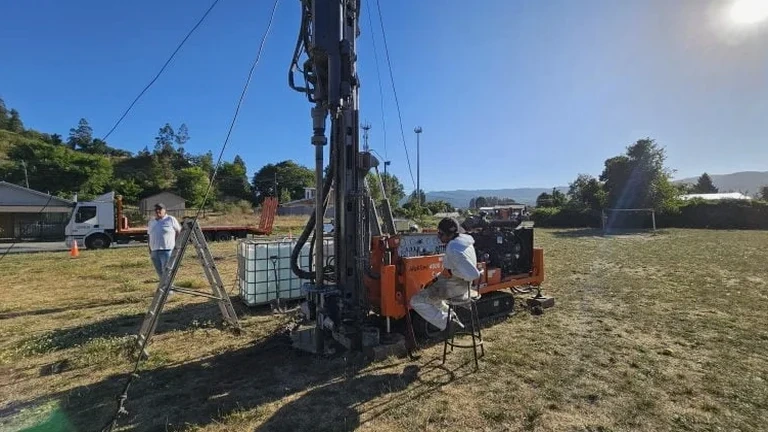
Excavate test pits at shallow refusal depth, then extend the profile with SPT drilling from the pit floor. This hybrid approach captures the critical upper 3-5 meters visually and extends the stratigraphic column to competent bearing strata.
Quick answers
How much does an exploratory test pit cost in Port Coquitlam?
The cost for a standard exploratory test pit program in Port Coquitlam, including a trackhoe with operator, a geotechnical engineer for logging, utility locates, and a summary report, typically ranges from CA$680 to CA$1,220 per pit. The final price depends on depth, access constraints, and whether laboratory testing on recovered samples is required.
How deep can you excavate a test pit without shoring?
In the stiff clay tills common across Port Coquitlam, we can typically reach 4.5 meters without shoring during dry weather. However, WorkSafeBC regulations require sloping or a trench box for any excavation deeper than 1.2 meters where entry is necessary. We assess soil stability on the day of excavation and install protective systems accordingly.
What is better for my site, a test pit or a borehole?
A test pit is better when you need direct visual examination of the soil profile, identification of fill materials, or collection of high-quality block samples. A borehole is better when you need to investigate deeper than 5 meters or require SPT N-values for deep foundation design. We often recommend a combined approach for sites with variable ground conditions.
Do I need a permit to excavate a test pit in Port Coquitlam?
A standalone test pit for geotechnical investigation does not typically require a City of Port Coquitlam building permit, but you must obtain a right-of-way permit if the pit is located within the city boulevard or road allowance. We handle the BC 1 Call utility clearance and coordinate with the city’s engineering department for any right-of-way access requirements.