Port Coquitlam sits on a mix of river-deposited silts and dense glacial till. What you hit at 2 meters is rarely what you get at 8. We see this constantly on projects near the Coquitlam River escarpment and the Pitt River flats. A Standard Penetration Test (SPT) gives you layer-by-layer blow counts that translate directly into bearing capacity and settlement estimates. No assumptions. No extrapolating from a neighbor's boring log three blocks away. The crew runs the split-spoon sampler at the depths your structural engineer needs. In deeper floodplain zones we often pair the SPT with a CPT test to fill in the continuous profile between drive samples. It makes the subsurface picture much sharper without doubling the budget.
SPT N-values are still the most widely correlated in-situ test in geotechnical practice — when done right, they anchor the entire foundation design.
Service characteristics in Port Coquitlam
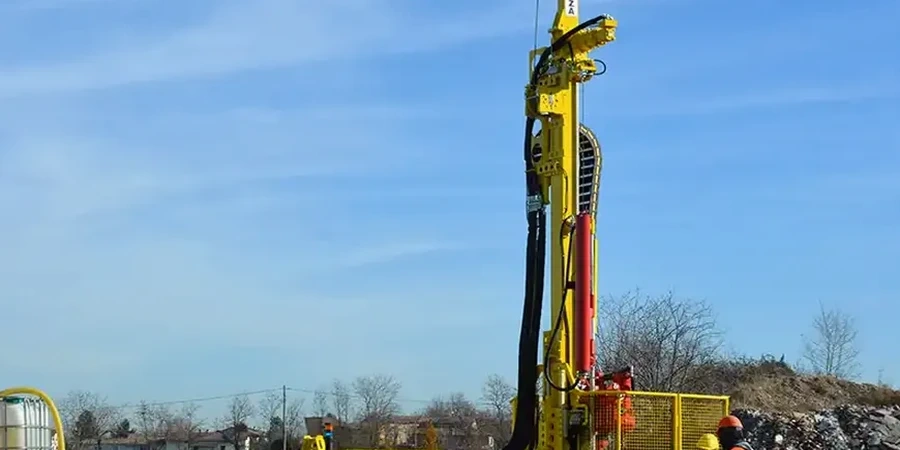
Local geotechnical conditions in Port Coquitlam
The Pitt and Coquitlam Rivers laid down alternating layers of soft silt, organic clay, and loose sand across Port Coquitlam. NBCC 2020 places the city in a moderate-to-high seismic zone. Combine those two facts and liquefaction screening stops being optional. SPT blow counts feed directly into simplified procedures — Seed and Idriss, Youd et al. — to estimate cyclic resistance ratio. A raw N-value of 5 in a silty sand at 4 meters depth triggers a different conversation than N=22 in dense till. We also flag depth to groundwater. In wet winters it rises within 1.5 meters of grade in the low-lying areas. That changes effective stress. It changes blow count interpretation. A liquefaction assessment layered onto the SPT data gives the structural team a defensible design basis.
Our services
SPT drilling anchors the investigation program. These complementary services fill in the information gaps that blow counts alone cannot address.
SPT with Sampling
Standard penetration testing with split-spoon recovery at prescribed depths. Disturbed samples bagged and labeled for lab classification.
Borehole Logging
Detailed field logs with soil description, moisture condition, consistency, and drilling notes. Compiled into CSA-format borehole logs.
Liquefaction Screening Package
Combines SPT N-values, fines content from lab, and groundwater data to compute factor of safety against liquefaction under NBCC seismic demands.
Quick answers
What depth of SPT drilling is typical for a Port Coquitlam house foundation?
For a single-family home on strip footings we usually drill to 6 meters or refusal, whichever comes first. A two-storey addition near the floodplain might need 8 meters to check for compressible silts under the bearing stratum.
How much does an SPT investigation cost in Port Coquitlam?
Budget between CA$640 and CA$1,150 per borehole depending on depth, access, and how many SPT samples are taken. Mobilization and traffic control on tighter residential streets may add a separate line item.
Do you report N60 corrected values?
Yes. We report raw N-values on the field log and apply corrections for hammer energy, rod length, borehole diameter, and overburden pressure in the final geotechnical report. The correction follows the approach outlined in the Canadian Foundation Engineering Manual.
Can you drill in a backyard with limited access?
We run a compact track-mounted rig that fits through a standard 1.2-meter gate. If there is overhead clearance for the mast and the ground can support the tracks, we can usually get the borehole in without dismantling fences.
How soon are the field logs available after drilling?
Field logs are scanned and shared within 24 hours of completing the borehole. The full interpretive report with corrected N-values and foundation recommendations follows in three to five business days.