Port Coquitlam sits at 5 meters above sea level on the floodplain of the Coquitlam and Pitt Rivers. That low elevation means saturated silts and clays are common in nearly every borehole drilled across the city. Atterberg limits testing becomes the first critical step in classifying these fine-grained soils. Without knowing the liquid limit and plastic limit, you cannot predict volume change during the wet winter months. We run the full ASTM D4318 procedure on every sample from Port Coquitlam. The data feeds directly into foundation design and earthworks specifications. For granular layers found at depth, we often pair this with a grain size analysis to complete the USCS classification. The transition from alluvial clay to glacial till in this city demands careful laboratory characterization.
A plasticity index above 30 in Port Coquitlam clay signals high shrink-swell potential that must be addressed in foundation design.
Service characteristics in Port Coquitlam
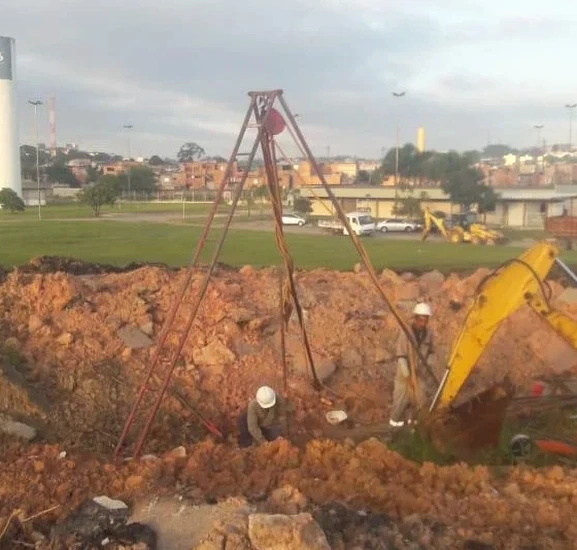
Local geotechnical conditions in Port Coquitlam
The NBCC 2020 references CSA A23.3 for concrete structures, but the geotechnical input to those designs starts with index testing. In Port Coquitlam, the dominant risk is misclassifying a high-plasticity clay as a silt. That error can trigger a chain of incorrect assumptions about bearing capacity and settlement. A liquid limit above 60 combined with a high natural water content often indicates sensitive clay behavior. These soils lose significant strength when remolded. The Atterberg limits test provides the first warning sign. We flag samples with plasticity indices above 25 for additional triaxial testing to confirm effective stress parameters. Skempton's activity ratio further refines the classification by relating PI to clay fraction.
Our services
Our laboratory testing program for Port Coquitlam projects includes the following Atterberg limits services.
Full Atterberg Suite
Liquid limit, plastic limit, and plasticity index determination on cohesive soil samples. Includes USCS classification and a summary chart plotting the results on the Casagrande plasticity chart.
Shrinkage Limit Testing
Additional testing for high-plasticity clays where volume change is a design concern. This test quantifies the water content below which the soil ceases to shrink, providing data for expansive soil mitigation.
Quick answers
What is the cost of Atterberg limits testing for a Port Coquitlam project?
The routine suite including liquid limit, plastic limit, and plasticity index ranges from CA$90 to CA$150 per sample. Adding the shrinkage limit test increases the cost slightly. We provide a firm quote once we know the number of samples and the required turnaround time.
How do you prevent sample drying before Atterberg testing?
We store all Port Coquitlam samples in sealed containers at field moisture content until the wet preparation begins. The samples are never oven-dried before processing, as that would alter the clay mineral behavior and produce unrepresentative liquid limit values.
Which Atterberg limits values trigger additional testing?
When the plasticity index exceeds 25 or the liquid limit passes 50, we recommend supplementary testing. This typically includes triaxial compression tests to establish effective stress parameters, and sometimes consolidation testing if settlement is a critical design parameter.